

Used vehicle gross is the most controllable lever on a franchise dealer’s P&L right now.
New car front-end is largely reactive — it moves with inventory levels, incentive programs, and consumer pricing expectations that individual dealers don’t control. Fixed ops gross is relatively stable but bounded. Finance and insurance has compression of its own. Used vehicle gross, specifically the gross produced by a deliberate acquisition strategy, is the one area where operational decisions directly determine the outcome.
Most franchise dealers aren’t treating it that way.
This guide covers the full picture of where used vehicle gross comes from in 2026 — the channels, the economics, the margin drivers, and what the dealers outperforming their markets are doing differently. It’s designed as a reference for dealer principals and GMs who want to understand the complete landscape before making decisions about where to allocate acquisition budget and operational focus.
The State of Dealer Profitability in 2026
To understand where used vehicle gross fits in the current P&L, it helps to understand what happened to the rest of it.
The 2020–2022 period produced an anomaly in franchise automotive retail: new vehicle front-end gross that was historically high, driven entirely by supply constraints rather than operational excellence. Dealers who had never seen above-MSRP deals on mainstream models were running them routinely. The P&L looked exceptional. The underlying operations hadn’t changed.
When inventory normalized, the gross normalized with it. Front-end compression on new vehicles has returned the new car department to a range that requires genuine discipline to sustain — and for many dealers, the profitability gap left by normalizing new gross hasn’t been filled.
The dealers who’ve filled it have done so on the used side. Not by finding a better auction, not by hiring more used car managers, but by changing where used inventory comes from and what it costs to acquire it.
That’s what this guide is about.
Used Vehicle Gross: The Three Variables That Matter
Used vehicle gross on any given unit is a function of three variables:
1. Acquisition cost — what you paid to get the vehicle into your inventory, including all fees, transport, recon, and carry.
2. Retail price — what the market will bear for that unit in your market, which you have limited ability to influence beyond pricing discipline and merchandising.
3. Transaction dynamic — who had leverage in the deal, how much either party knew, and what motivated the customer to engage. This variable is underappreciated and has an outsized effect on gross.
Most dealers focus heavily on Variable 2 (retail pricing) and have some discipline around Variable 1 (acquisition cost at the buy price level, if not at the true all-in cost level). Almost no dealers systematically manage Variable 3 — and it’s Variable 3 that explains most of the gross difference between acquisition channels.
We’ll come back to this. First, the channels.
The Three Primary Acquisition Channels
Every used vehicle in your inventory came from one of three places. The economics of each are materially different.
Channel 1: Auction
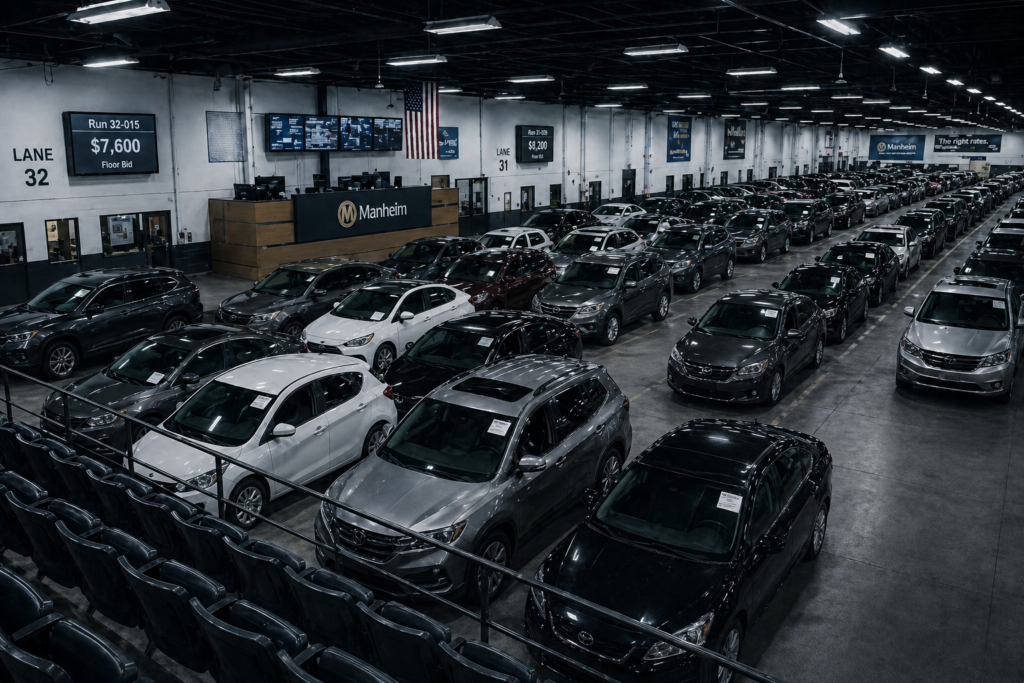
Auction is the dominant used vehicle sourcing channel for most franchise dealers by volume. It’s fast, it’s scalable, and the process is well-understood. It’s also the lowest-gross, highest-cost channel available.
The gross problem with auction isn’t the buy price — it’s the true all-in cost. As detailed in The True Cost of Buying Used Cars at Auction, a typical auction unit carries $1,800–$2,500 in costs above the buy price before it’s retail-ready: buyer’s fees ($300–$550), transport ($150–$600+), recon ($800–$2,000 depending on condition report accuracy), and floor plan carry on a retail cycle that runs longer than trade-in inventory.
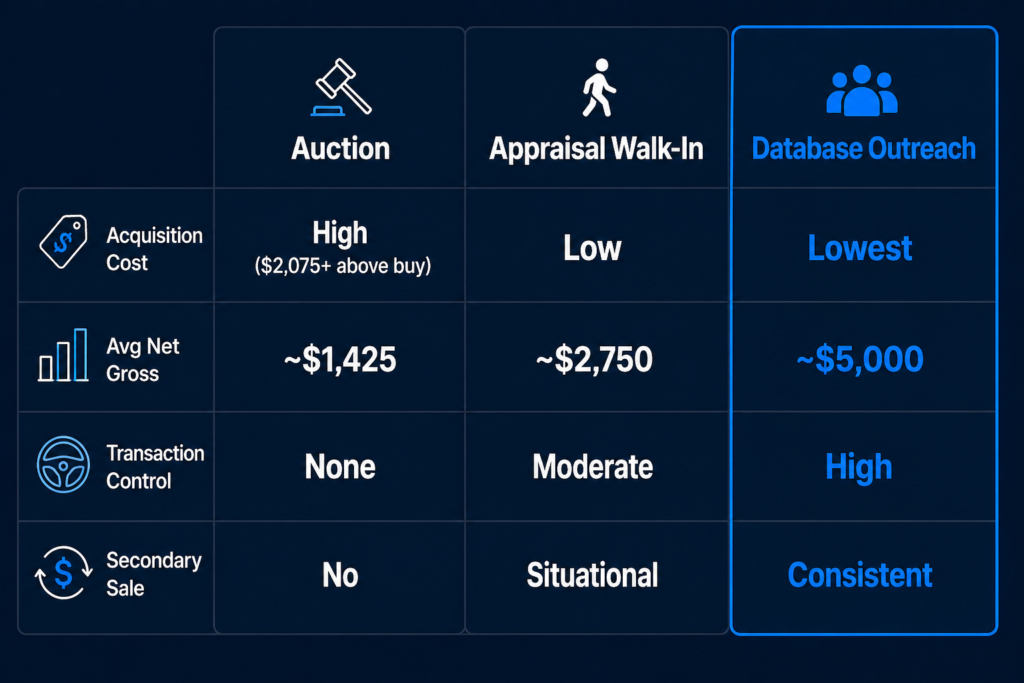
The result: the average auction unit produces approximately $1,425 in true net front-end gross after accounting for the full cost stack — not the $3,500 that shows up in the deal jacket.
The transaction dynamic compounds the problem. You’re buying blind, against other dealers, with incomplete information. You have no relationship with the previous owner, no vehicle history beyond a condition report that misses things, and no secondary sale opportunity attached to the acquisition.
Auction will always have a role for specific vehicles and inventory gaps. As the primary sourcing channel for a franchise dealer’s used operation, it’s an expensive habit.
Channel 2: Appraisal Lane Walk-In
The appraisal lane is meaningfully better than auction on every dimension that matters for gross. You know the vehicle, you can inspect it before committing, recon is more predictable, and the acquisition cost above trade allowance is minimal — no fees, no transport.
Average front-end gross on an appraisal lane trade-in runs approximately $2,500–$3,000, reflecting the lower acquisition cost and better transaction information compared to auction.
The limitation is that it’s reactive. You have no control over volume, timing, or the quality of vehicles that walk in. A customer who drove past three CarMax locations and a Carvana instant offer before ending up on your lot may already have an outside appraisal in their pocket. You’re competing for a deal that’s already in motion.
Appraisal lane walk-ins are a good channel. They’re not a sourcing strategy — you can’t budget around them or scale them deliberately.
Channel 3: Proactive Database Outreach — Past Buyer
This is the channel most franchise dealers have available and aren’t systematically using. Every dealer with an active CRM has past buyers who are in or approaching their vehicle upgrade window right now. The average ownership cycle runs 3–5 years, which means a significant percentage of customers who bought from you in 2020–2022 are natural trade candidates today.
The economics of this channel are structurally different from the other two, for reasons that go beyond simple acquisition cost:
You control the timing. You reach out when the customer is in the upgrade window — not when they’ve already started shopping. That changes the entire transaction dynamic.
You know the vehicle. Service history, ownership profile, estimated mileage — you can size the recon picture before you’ve committed to a trade value. No blind buys.
There’s no outside appraisal in play. A customer who came in because you contacted them proactively hasn’t spent the week collecting competing offers. You’re doing the appraisal first, with a customer who trusts your brand.
They’re buying something. A proactively contacted past buyer in the upgrade window is almost always purchasing a replacement. The used acquisition appointment is simultaneously a new or CPO sales opportunity — dual gross from a single outreach contact.
The result: average front-end gross on a proactively sourced database trade-in runs approximately $5,000. Against an auction unit’s $1,425 true net gross, that’s a $3,500 per-unit spread that compounds significantly at scale.
The Gross Driver Most Dealers Underestimate: Transaction Dynamic
Earlier we identified transaction dynamic as the third variable in used vehicle gross — and the most underappreciated one. It’s worth spending a moment on why.
When you source a vehicle from auction, you’re buying an asset in a competitive market with incomplete information. Your gross ceiling is set before the car ever reaches your lot.
When an appraisal lane customer walks in, the transaction dynamic depends on context. If they came in cold, with no outside offers, you have reasonable leverage. If they’ve already been to CarMax and have a number in their pocket, you’re now in a competitive situation — and you don’t know what you’re competing against.
When you proactively contact a past buyer from your own database, you set the frame. You initiated the conversation. The customer is responding to your outreach, not pursuing a purchase they’ve already decided to make. They haven’t collected competing appraisals. They haven’t started comparison shopping. The negotiating dynamic — who has information, who has leverage, who is driving the timing — is inverted relative to the other two channels.
That inversion is worth approximately $2,000–$3,000 in gross per unit, above and beyond the acquisition cost savings. It’s not a soft benefit — it shows up in the numbers. The full ROI framework by channel makes this explicit.
What a Channel Shift Produces at Scale
The dealer principals who have run the channel math on their own operations find the same thing: they’re more auction-dependent than they thought, and the gross impact of that dependency is larger than they realized.
A mid-size single-rooftop dealer retailing 30 used units a month at 70% auction sourcing is generating roughly $54,675 in monthly used front-end gross. The same dealer, after shifting 15 units a month to database outreach, generates approximately $108,300 — from the same retail volume, with no additional headcount.
That’s the framework in detail in Used Vehicle ROI by Acquisition Channel. The math is straightforward; the operational question is whether the dealer has a system to execute the channel shift.
The Execution Gap — and What Closes It
The reason most dealers aren’t already running a systematic database outreach program isn’t that they don’t know the opportunity exists. It’s that the operational motion required is genuinely different from how BDC teams are structured and incentivized.
Proactive database outreach requires:
- Ongoing identification of upgrade-eligible customers from CRM data
- Personalized multi-touch outreach via SMS and email at scale
- Consistent conversation handling, objection response, and real-time appraisal generation
- Appointment booking and rep routing without manager intervention
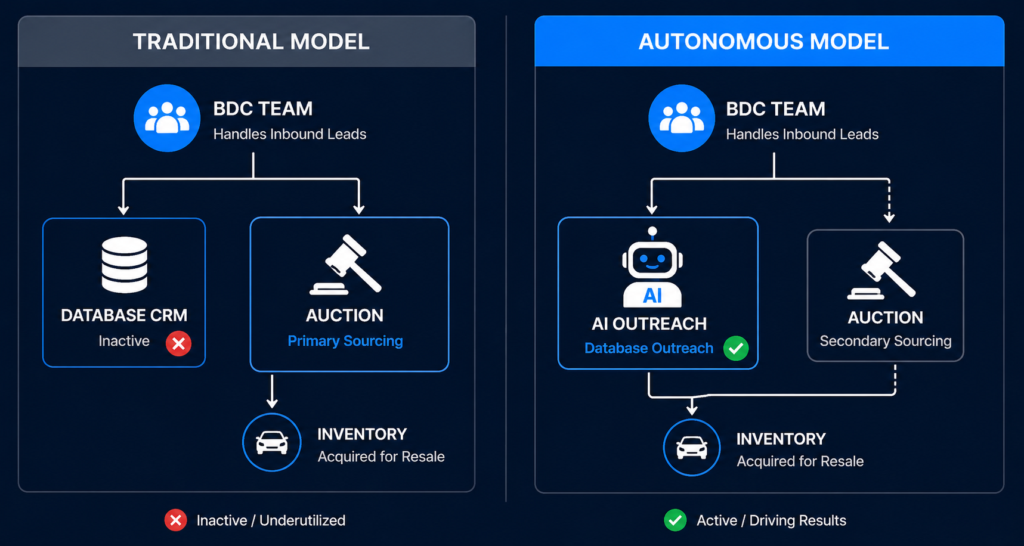
Traditional BDC teams handle inbound response. The skills, incentives, and workflows required for systematic outbound database mining are a different motion — one that, when left to a BDC team as a secondary responsibility, is inconsistent and quickly deprioritized when inbound volume picks up.
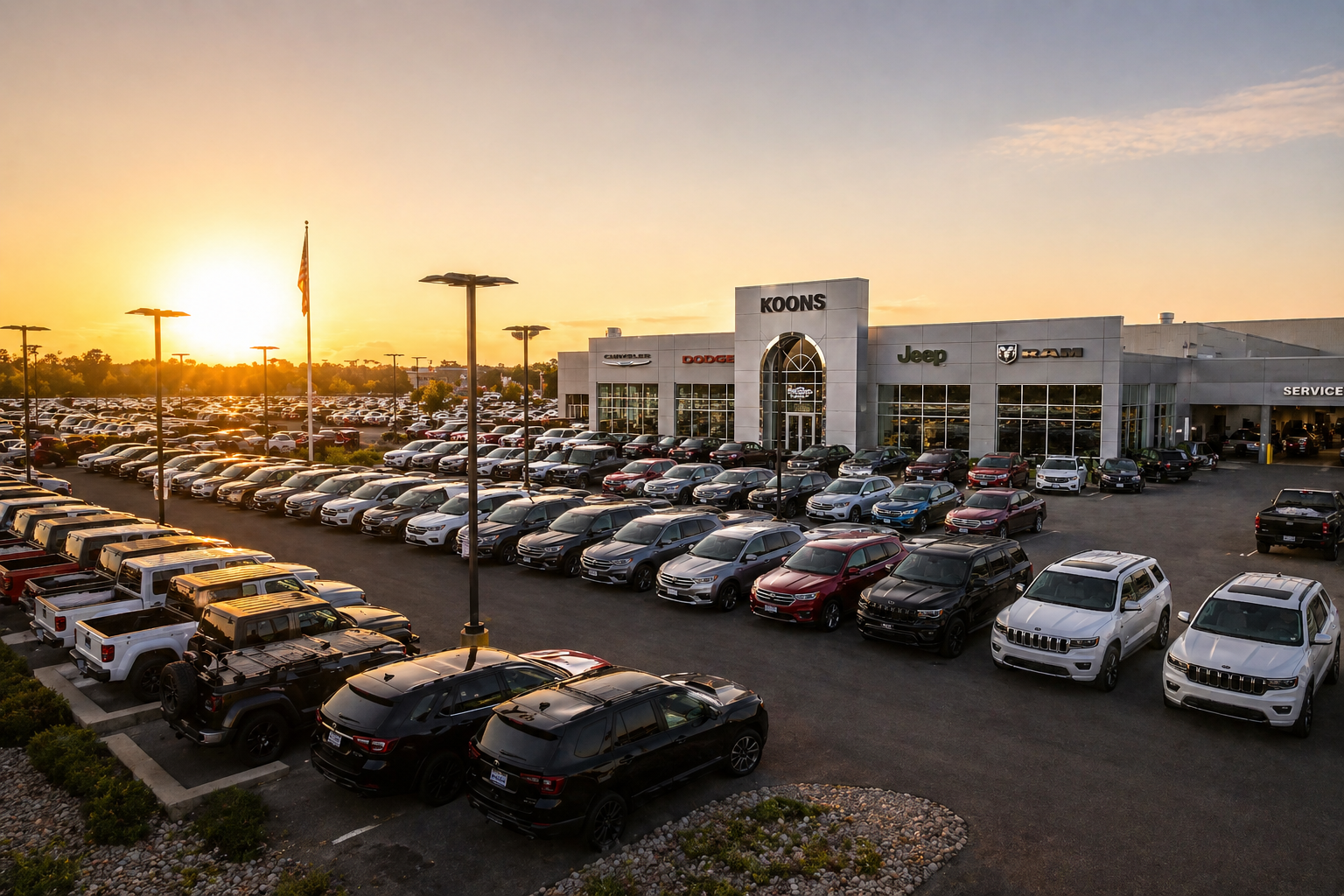
The dealers generating consistent database trade-in volume — Koons Motors at 53 appointments per month, $190,000 in monthly gross — aren’t doing it with expanded BDC teams. They’re running an autonomous outreach system that handles the full workflow from database analysis through appointment booking without human intervention. The BDC handles inbound. The AI handles the database. The two channels run in parallel without competing for resources.
A Framework for Evaluating Your Current Used Gross Position
Before making any acquisition strategy decision, a dealer principal needs to know where they actually stand. Here’s the three-step diagnostic:
Step 1: Calculate your true channel mix. Pull your used acquisitions for the last 90 days. Categorize each unit: auction, appraisal lane walk-in, proactive outreach, off-street. What percentage came from each channel? Most dealers who run this exercise find 60–80% auction dependency.
Step 2: Calculate your true net gross by channel. For auction units, subtract all costs above the buy price — fees, transport, recon, floor plan carry — from the deal jacket gross. Compare that against your appraisal lane units. The gap is almost always larger than expected. The full cost stack methodology is in The True Cost of Buying Used Cars at Auction.
Step 3: Estimate your database outreach upside. How many past buyers are in your CRM? Apply the 15–30% upgrade-eligible estimate. That’s your addressable outreach universe. Multiply by the $3,585–$5,000 gross range for proactively sourced trade-ins. That number — the gross sitting untouched in your database right now — is what the channel shift is worth.
For most franchise dealers running this diagnostic, the database outreach upside is $40,000–$100,000 per month in incremental gross on a single rooftop. Not incremental units. Incremental gross from the same or lower unit volume, because the channel economics are structurally better.
The Competitive Dimension
One more factor worth including in any honest assessment of used vehicle acquisition strategy: your competitors are increasingly aware of this dynamic.
CarMax, Carvana, and the independent dealers who’ve invested in outreach technology are actively contacting your past customers. They’re not waiting for those customers to walk in — they’re reaching out proactively, with trade appraisals and purchase offers, before the customer has thought about visiting a franchise dealer.
The franchise dealer’s structural advantage in this competition is the existing customer relationship. A past buyer who bought from you has a reason to trust your appraisal over a CarMax offer — if you make contact first, with a credible offer, before they’ve already committed elsewhere.
The window for that first-mover advantage exists today. It narrows as more dealers adopt systematic database outreach programs. The dealers who build the capability now are establishing a sourcing channel that will be defensible over time. The dealers who wait are increasingly competing for customers who’ve already been through someone else’s acquisition funnel.
Summary: What Moves Used Vehicle Gross in 2026
The levers are not complicated:
Reduce auction dependency. Every unit shifted from auction to database outreach is worth approximately $3,500 more in net gross. At 10 units a month, that’s $35,000. At 20, it’s $70,000.
Build a proactive database outreach channel. The contacts already exist. The upgrade-eligible segment is there. The gap is the systematic outreach motion — which, when executed autonomously rather than through a BDC, is consistent and scalable.
Measure true net gross by channel. Deal jacket gross is not the number. True net gross — after the full acquisition cost stack — is. The dealers who know their real per-unit economics by channel make better allocation decisions.
The full unit economics, channel comparisons, and ROI framework are covered across the cluster posts in this category. Start with Auction vs. Trade-In: The $3,500 Gross Difference if you want the core economic argument. Start with Used Vehicle ROI by Acquisition Channel if you want the decision-support framework. Start with Koons Motors if you want to see what it looks like when a dealer gets it right.
See what your database could produce →
FAQ
What is the average used vehicle gross profit for a franchise dealer? Average used vehicle front-end gross varies significantly by acquisition channel. Auction-sourced units produce approximately $1,425 in true net gross after accounting for all acquisition costs. Appraisal lane walk-ins average $2,500–$3,000. Trade-ins sourced proactively from a dealer’s own customer database average approximately $5,000. The channel mix determines the blended average — and most franchise dealers are weighted toward the lowest-gross channel.
Why is used vehicle gross more important than new vehicle gross in 2026? New vehicle front-end gross has compressed significantly from pandemic-era highs as inventory normalized. The variables that drive new car gross — inventory levels, manufacturer incentives, consumer pricing expectations — are largely outside individual dealer control. Used vehicle gross, particularly gross generated through proactive database acquisition, is directly controllable through operational decisions. That controllability makes it the primary P&L lever available to dealer principals in the current market environment.
What is the most profitable used vehicle acquisition channel for franchise dealers? Proactive database outreach to past buyers is the highest-gross, lowest-cost acquisition channel available to franchise dealers. Average front-end gross of approximately $5,000 per unit, minimal acquisition cost above trade allowance, predictable recon, and consistent secondary sale opportunity (the customer is buying a replacement vehicle) make it structurally superior to auction and appraisal lane walk-ins on every gross metric.
How do I calculate true net gross on used vehicle acquisitions? Start with deal jacket gross. Subtract all costs above the buy price or trade allowance: auction buyer’s fee, transport, recon above initial estimate, and floor plan carry for days beyond average retail cycle. The result is true net gross — the number that reflects actual profitability rather than the spread between acquisition cost and retail price before accounting for variable costs.
How many used vehicles should come from a dealer’s own database? There’s no universal target, but franchise dealers with active CRM databases and no current outreach program are typically leaving 40–60% of their potential database gross untouched. A dealer generating 30 used units a month with 70% auction sourcing and zero database outreach is operating significantly below their gross potential. A reasonable medium-term target for a dealer with a healthy database is 40–50% of monthly used acquisitions from proactive database outreach.
What does it cost to shift used vehicle sourcing from auction to database outreach? The cost of a systematic database outreach program is a fixed monthly fee that doesn’t scale per unit — meaning cost per unit decreases as outreach volume increases. Against auction sourcing costs of $1,800–$2,500 per unit above buy price, a database outreach program producing 15+ units per month typically has significantly lower per-unit acquisition cost than auction within the first 60–90 days of operation.
In this category:
- Auction vs. Trade-In: The $3,500 Gross Difference Dealers Are Leaving on the Table
- What Does a Used Car Actually Cost You? The Real Math Behind Auction Dependency
- Front-End Gross Is Compressed. Here’s Where Dealers Are Finding Margin Instead.
- The Trade-In Gross Advantage: Why Your Own Customers Are Your Highest-Margin Inventory Source
- Used Vehicle ROI by Acquisition Channel: A Framework for Dealer Principals
- 53 Trade-Ins a Month: How Koons Motors Changed Its Used Vehicle Acquisition Strategy