

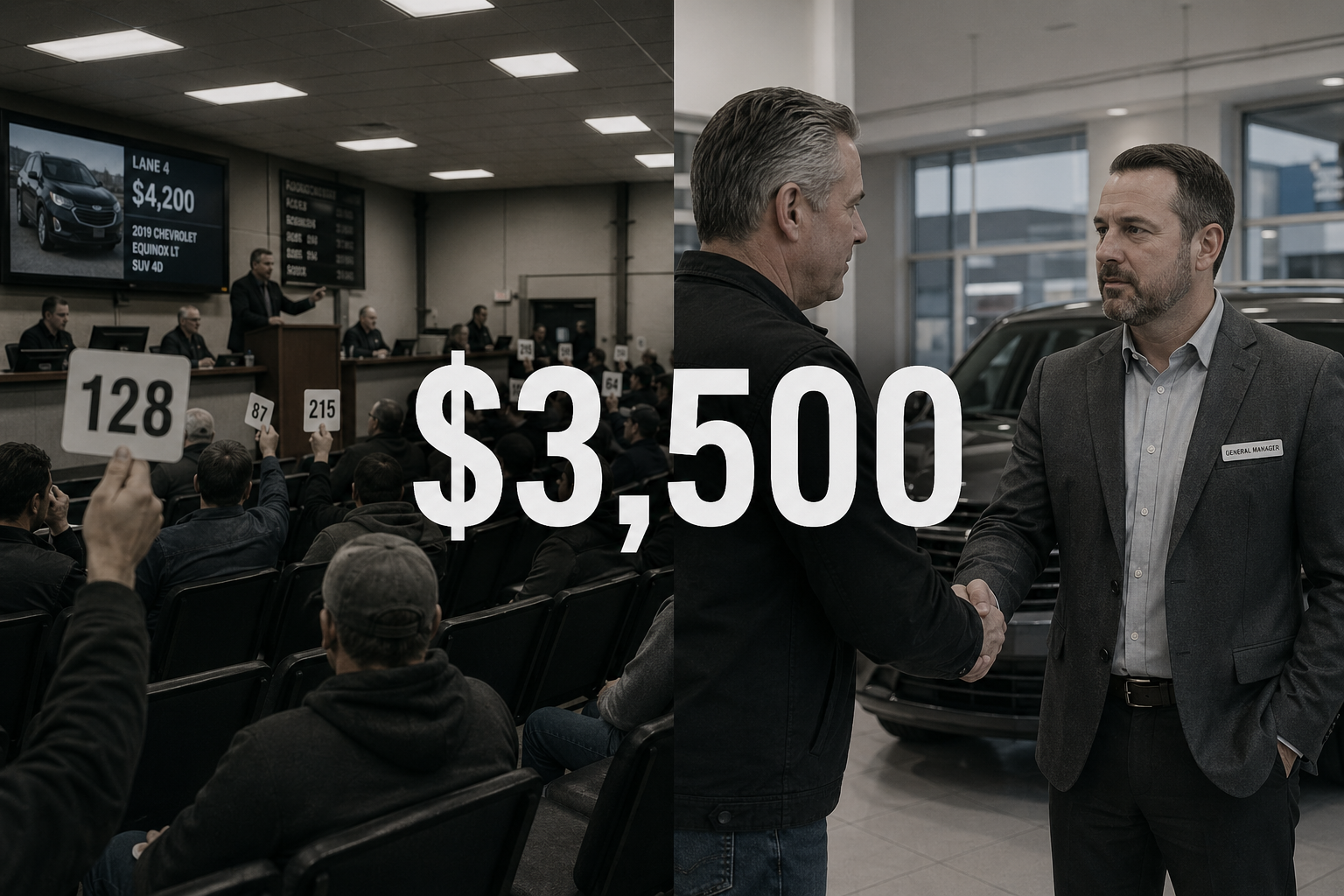
There’s a number every GM knows but rarely says out loud: the average unit bought at auction produces around $1,500 in front-end gross. Thin margin, high risk, and that’s before you factor in what getting there actually costs.
There’s another number most GMs don’t track as precisely: the average trade-in sourced from your own customer database produces closer to $5,000 in front-end gross.
The gap between those two numbers — roughly $3,500 per unit — is the most consistent profit leak in franchise automotive retail. And for most dealers, it’s happening dozens of times a month.
This post breaks down why that gap exists, what’s hiding inside the true cost of an auction unit, and what it means for how you think about used vehicle acquisition.
The Auction Unit: What You’re Really Paying
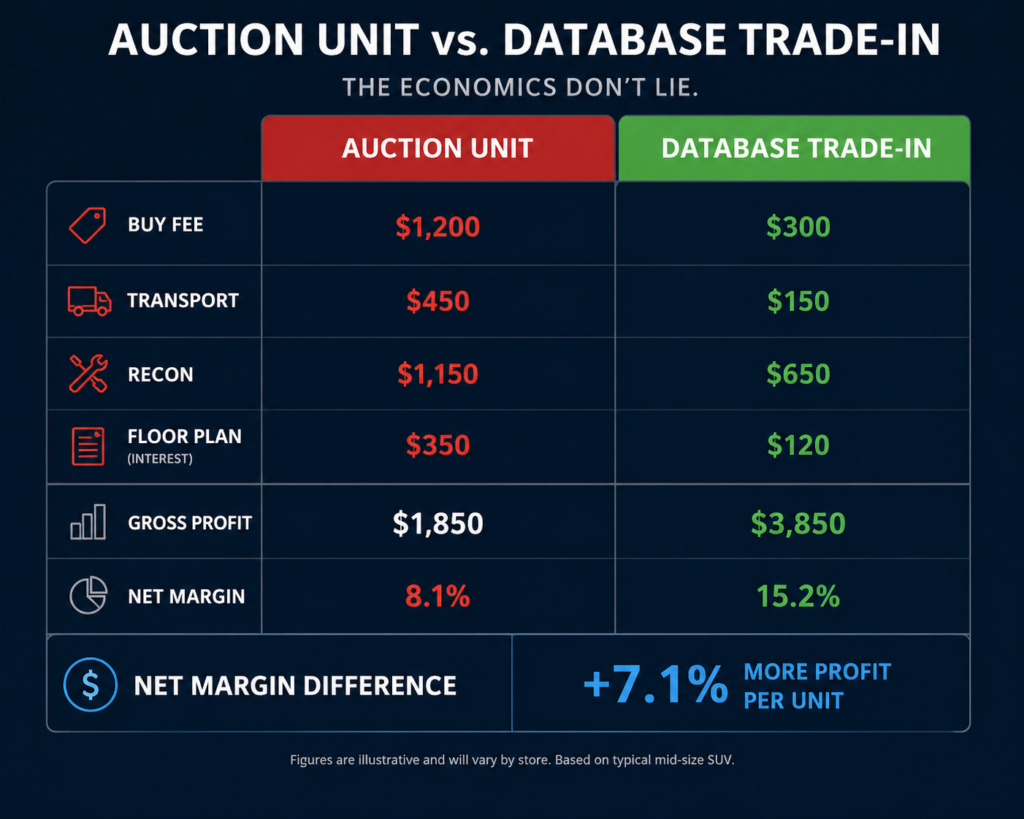
The bid price is the beginning, not the end. Here’s what the full cost of an auction acquisition actually looks like when you add it up:
Buy fee: $300–$500 depending on the lane and auction house. Non-negotiable, every unit.
Transport: $150–$400 depending on distance. Regional auction? You’re on the low end. Sourcing inventory from out of market because your local auction is picked clean? Higher.
Recon: This is where the math gets dangerous. The average recon cost on an auction unit runs $800–$1,500 — and unlike a trade-in with a known history, you’re often discovering problems after you’ve already bought it. Surprises here compress margin fast.
Floor plan carry: If the unit sits 30+ days before retailing — and the national average for auction-sourced inventory is longer than dealer-sourced — you’re paying floor plan interest on a unit that’s already cost you acquisition fees.
Total all-in acquisition cost above buy price: $1,250–$2,300+ before the unit is retail-ready.
Now layer that against what the unit actually produces. The average franchise dealer retailing an auction unit generates approximately $1,500 in front-end gross. On a bad unit — one with hidden recon, a slow retail cycle, or a market that’s moved on the vehicle — you’re at breakeven or below.
The Trade-In From Your Own Database: Different Economics Entirely
A trade-in sourced from a proactive outreach to a past buyer in your database doesn’t just produce better gross — it produces better gross structurally, for reasons that compound.
You control the appraisal conversation. You’re not competing against three other dealers on a lane. You’re talking to someone who already bought from you, who trusts your brand, and who came in specifically because you reached out. The negotiating dynamic is fundamentally different.
You know the vehicle history. A customer who bought a Camry from your Toyota store three years ago — you have the service records, you know the ownership profile, you can estimate recon before you commit. No surprises.
The customer is already pre-qualified for a new purchase. A database trade-in isn’t just an inventory acquisition — it’s a sales appointment. The customer who brings in a trade is usually buying something. You’re generating two gross opportunities from one outreach.
Recon is predictable. Average recon on a trade-in from a known customer runs significantly lower than an auction blind buy. You’re not underwriting unknown risk.
The result: average front-end gross on a trade-in sourced from your own customer database runs approximately $5,000. Some dealers running disciplined database outreach programs report higher.
The $3,500 difference isn’t a rounding error. On 20 units a month, that’s $70,000 in gross you’re not capturing. On 40 units, it’s $140,000.
Why Dealers Keep Buying at Auction Anyway
If the math is this clear, why does auction dependency persist?
A few reasons, all real:
Auction is fast and predictable. You know what you’re getting, when you’re getting it, and roughly what it costs. The process is understood. Database outreach requires a different operational motion — and most BDC teams aren’t set up for it, aren’t incentivized for it, and aren’t consistent enough for it to become a reliable sourcing channel.
Appraisal lane walk-ins are unpredictable. You can’t budget around hoping the right vehicles walk onto your lot. Volume is reactive, not proactive.
Nobody’s been systematically working the database. The contacts are there. The upgrade-eligible customers are there — industry data suggests 15–30% of your past buyers are within their vehicle ownership cycle right now. But identifying them, reaching out at scale, handling the conversation, and booking the appointment requires a consistent system most dealers haven’t built.
The dealers closing that gross gap aren’t finding a magic new inventory source. They’re activating the source they already own.

What the Math Means for Your Acquisition Strategy
The auction isn’t going away. For specific vehicles, specific markets, and specific inventory gaps, it’s still the right tool. But treating it as your primary used vehicle sourcing channel — when you have a database of thousands of past buyers you’ve already paid to acquire — is one of the most expensive habits in retail automotive.
Every unit you source from your own database instead of the auction lane is worth approximately $3,500 more in gross. Before incentives. Before back-end. Before the additional new vehicle gross from the trade-in customer’s replacement purchase.
The dealers producing 20, 30, 50+ trade-ins a month from their existing databases aren’t doing it with bigger BDC teams or more aggressive floor staff. They’re doing it with a systematic, proactive outreach process that identifies upgrade-eligible customers and starts the conversation before CarMax or the lot down the street does.
See what your customer database could produce →
FAQ
What is the average gross profit on an auction unit for a franchise dealer? The average front-end gross on an auction-sourced unit is approximately $1,500, though this varies by vehicle segment, market conditions, and recon costs. When you factor in all-in acquisition costs — buy fees, transport, recon, and floor plan carry — many auction units produce minimal net margin or operate at a loss.
How much more gross does a trade-in generate compared to an auction unit? Trade-ins sourced proactively from a dealer’s existing customer database typically produce $4,500–$5,000 in front-end gross, compared to approximately $1,500 for an auction unit. The difference is driven by lower acquisition cost, predictable recon, and a stronger negotiating position with a known customer.
Why do franchise dealers rely on auction for used inventory? Auction provides speed and predictability that reactive sourcing channels — appraisal lane walk-ins, private purchases — don’t. The operational challenge is that proactively working a customer database requires consistent outreach, follow-up, and appointment-setting that most dealerships haven’t systematized.
How do I calculate the true cost of an auction unit? Start with the buy price, then add: buyer’s fee ($300–$500), transport ($150–$400), recon ($800–$1,500 average, higher for unknowns), and floor plan carry for any days beyond your average days-to-retail. Compare the total against your actual retail price and back out true gross — not just the difference between buy and sell.
What percentage of past buyers are in their vehicle upgrade window? Industry data suggests 15–30% of a dealer’s existing customer database is within the vehicle ownership upgrade cycle at any given time — meaning they’ve owned their current vehicle long enough that equity, mileage, or lifecycle factors make them a realistic trade candidate right now.